
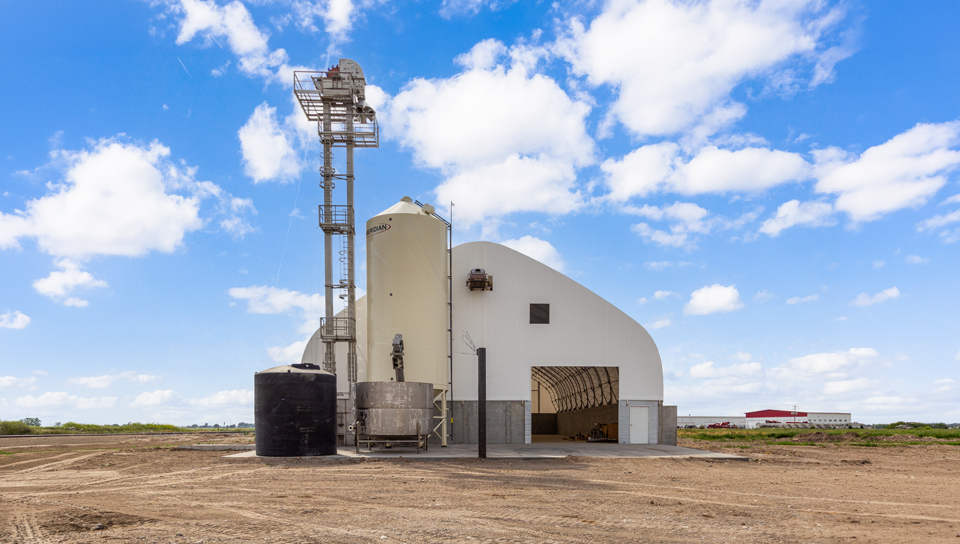
Winning the Fight Against Corrosion in Fertilizer Facilities
A version of Tony’s article was first published in the Jan/Feb 2026 issue of Fertilizer Focus.
Corrosion is one of the most persistent and misunderstood challenges in fertilizer facility design. Engineers and facility designers know the stakes: Chloride-based fertilizers are inherently aggressive. Dust attracts moisture. Temperature swings create condensation cycles. And once corrosion starts, it rarely announces itself politely.
The goal is not to eliminate corrosion entirely. (It’s just not realistic.) Instead, the goal is to slow it intentionally, predictably, and systematically so that service life, safety, and structural integrity are preserved.
Below is a practical guide to how corrosion develops in fertilizer operations, and how thoughtful design decisions can dramatically reduce long-term risk.
What causes corrosion in fertilizer facilities?
Corrosion in fertilizer operations is typically the result of chemistry, moisture, and design interacting over time.
Chloride-containing fertilizers such as urea, potash, and ammonium chloride are naturally aggressive toward metal. Fertilizer dust compounds the issue. Dust absorbs moisture from the air and holds it against steel surfaces, often in areas that are difficult to see or inspect.
High humidity, limited airflow, and repeated condensation cycles accelerate deterioration. In enclosed or partially enclosed spaces, moisture lingers. In regions with large temperature swings, condensation forms and dries repeatedly, stressing coatings and exposed steel.
Key takeaways:
- Corrosion in fertilizer facilities is driven by chlorides + moisture + trapped air.
- Dust accumulation creates hidden corrosion risk zones.
- Environmental control and structural design influence long-term performance as much as coating choice.
- Corrosion is not simply a materials issue, but an environmental systems issue.
How do chloride fertilizers accelerate steel deterioration?
Chlorides aggressively attack steel once moisture is present. This reaction can occur on structural beams, conveyor housings, support framing, blending equipment, and connection points.
One common misconception is that corrosion will always appear on the surface first. However, deterioration often begins under dust, inside joints, or in concealed structural areas. By the time visible rust appears, structural damage may already be underway.
Another misconception is that corrosion can be completely prevented. In fertilizer environments, that is not achievable. What is achievable, though, is extending service life through deliberate design decisions.
At Accu-Steel, we approach fertilizer applications with that reality in mind. Our role is to engineer durability from the start.
Key takeaways:
- Chlorides become highly corrosive when combined with moisture.
- Hidden areas are often the first failure points.
- The objective is life extension through systems-level design.
Why does ventilation matter so much?
If there is one universal design strategy that consistently reduces corrosion risk, it’s airflow.
Moisture is a primary driver of steel deterioration in fertilizer facilities. Ventilation reduces humidity, minimizes condensation cycles, and allows surfaces to dry more quickly.
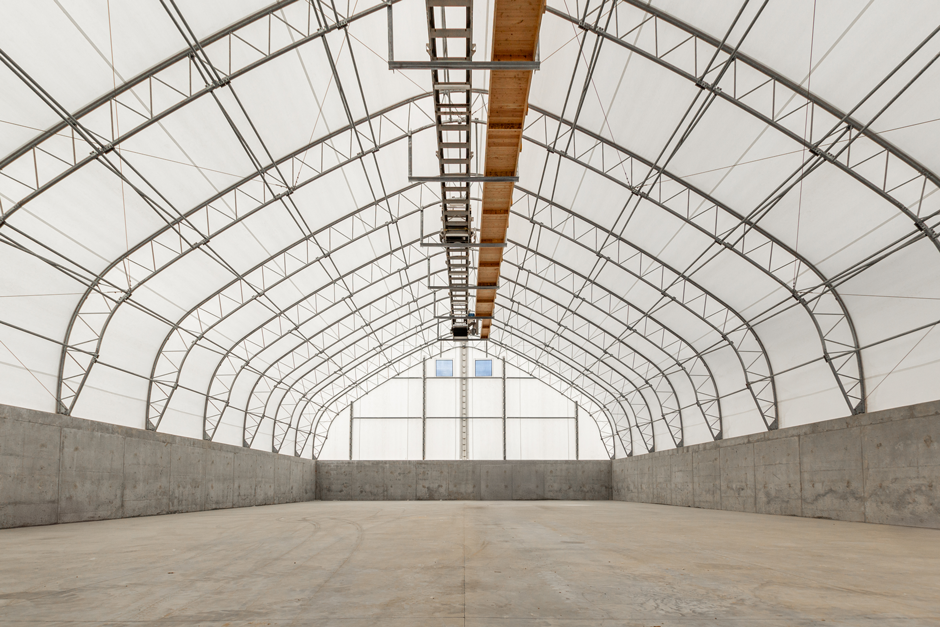
Clear-span structures with open end walls, soffit ventilation, and peak venting help move air through storage and blending areas. Improving air movement around structural members and equipment slows corrosion development across the entire system.
Ventilation alone is not enough—but without it, even premium materials will corrode.
This is one reason flat storage facilities are often advantageous in fertilizer applications. They allow for deliberate airflow planning while maintaining product protection.
Key takeaways:
- Ventilation reduces moisture retention and condensation cycles.
- Clear-span structures improve air movement and inspection access.
- Airflow strategy should be integrated early in facility design.
What materials perform best in fertilizer environments?
No material is completely corrosion-proof. But some perform significantly better than others. Hot-dipped galvanized steel remains one of the most durable and cost-effective corrosion protection systems for fertilizer facilities. The metallurgical bond formed during batch hot-dip galvanizing creates zinc-iron alloy layers that are significantly thicker and stronger than in-line continuous galvanizing.
For context:
- Batch hot-dip galvanizing typically applies ~3.0 mils of zinc coating.
- In-line continuous processes apply ~0.9 mils.
- The metallurgical bond strength of batch galvanizing approaches 3600 psi, compared to 300-500 psi for mechanically bonded zinc-rich paints.
That difference matters. Especially in concealed or interior surfaces where trapped moisture is common.
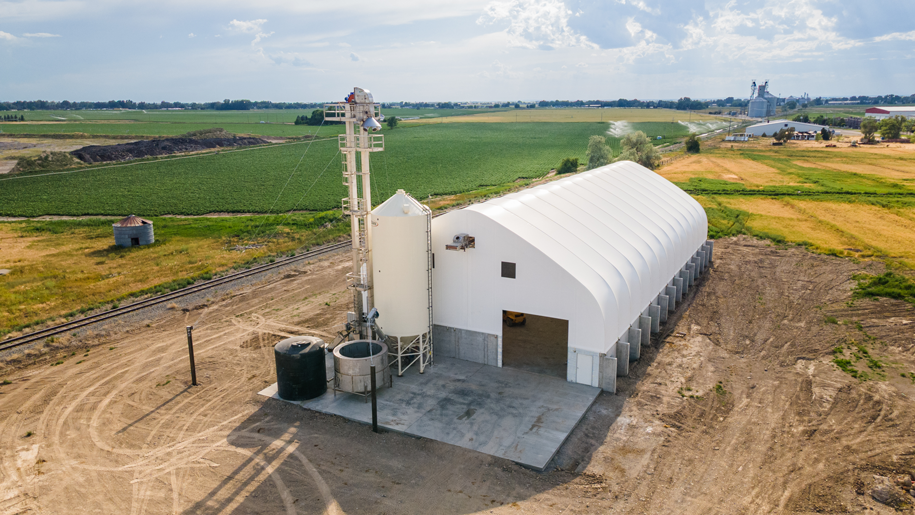
At Accu-Steel, our structural components are hot-dipped galvanized to provide long-term durability in high-moisture, chloride-heavy environments. This contributes to our industry-leading 20-year warranty (with an additional five years available for Sourcewell members).
Material selection should also minimize dissimilar metal contact and eliminate areas where fertilizer residue can collect. Design and material choice must work together.
Key takeaways:
- Batch hot-dip galvanizing provides thicker, metallurgically-bonded protection.
- Bond strength and coating thickness significantly impact service life.
- Corrosion resistance must include interior surfaces, not just exterior steel.
What maintenance practices actually make a difference?
Design sets the foundation. Maintenance protects the investment.
Two practices consistently deliver the highest impact:
- Regular cleaning to remove fertilizer dust accumulation.
- Routine inspections to identify early pitting or discoloration.
Since corrosion often develops out of sight, inspection protocols should include joints, concealed structural areas, equipment housings, and interior framing. When issues are caught early, they’re manageable. When ignored, they become structural liabilities.
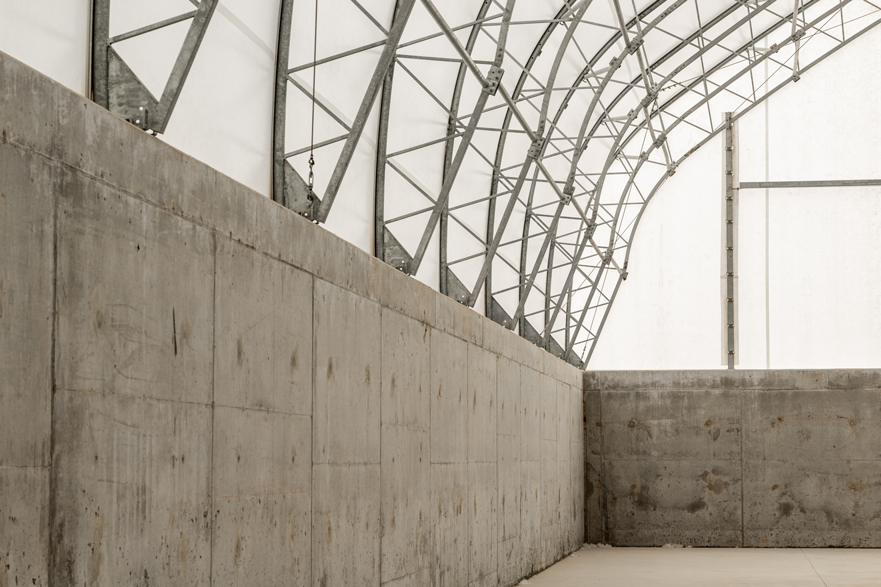
For example, we worked with Aspinwall Co-op to repair a competitor’s building that suffered from severe corrosion, storm damage, and a deteriorated tarp after only 14 years of use. With nearly 12,600 tons of fertilizer at risk, we quickly replaced the structure with hot-dipped galvanized steel trusses.
Key takeaways:
- Cleaning and inspection significantly extend service life.
- Hidden corrosion points require deliberate monitoring.
- Proactive facility design reduces long-term repair costs.
Corrosion will always be a factor in fertilizer operations. The difference lies in whether it’s managed intentionally or allowed to dictate service life.
For engineers and facility designers, corrosion control is the result of ventilation planning, material selection, structural detailing, and long-term maintenance alignment.
When those elements work together, fertilizer facilities become safer, more durable, and more predictable. That predictability is what protects capital investments and what allows operations to run without unnecessary disruption.