
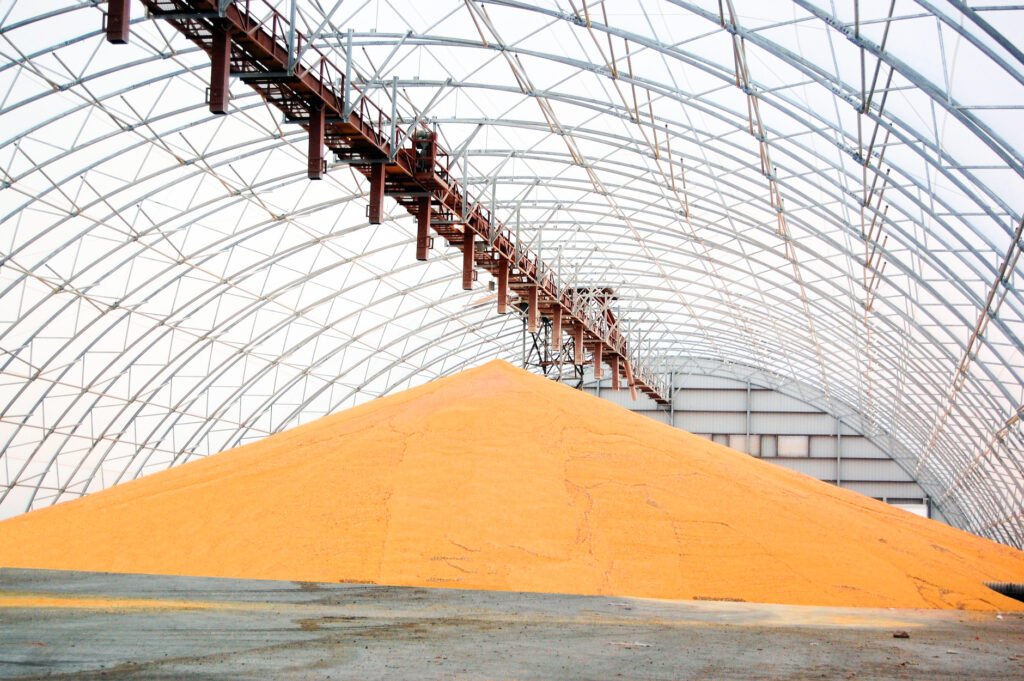
Grain storage has been under pressure for a while now and it’s not letting up. Strong yields and rising carryover continue to push facilities to their limits. And while harvest totals grab attention, the real strain shows up on the ground: longer lines, tighter receiving windows, and tough decisions about where grain can go.
For co-ops and grain operations, storage planning today is less about adding space and more about keeping the entire system moving. That starts with planning ahead, not reacting once bins are full.
Table of contents
- Why the storage gap keeps growing
- Operational pressure shows up everywhere
- Flat storage as a strategic capacity tool
- Rethinking “temporary” storage solutions
- Planning for efficiency, not just volume
Why the storage gap keeps growing
The storage gap is the result of steady yield growth paired with slow infrastructure expansion. Production keeps climbing, while new commercial storage struggles to keep pace (especially across the Midwest).
Carryover grain only adds to the pressure, tightening space before the next harvest even begins. Over time, that imbalance turns into an operational problem, not just a capacity one.
Key takeaways
- Storage growth hasn’t matched multi-year yield trends.
- Carryover grain reduces available space early.
- Capacity gaps show up first in day-to-day operations.
Operational pressure shows up everywhere
When storage runs tight, everything slows down. Receiving hours are limited. Truck lines grow. Crews are stretched. In some cases, facilities are forced to stop taking grain altogether.
These challenges don’t just affect the elevator. They impact producers, haulers, and staff across the system. Storage decisions directly influence how efficiently grain moves during peak demand.
Key takeaways:
- Capacity limits affect receiving hours and traffic flow.
- Congestion increases labor strain and delays.
- Throughput matters as much as total storage volume.
Flat storage as a strategic capacity tool
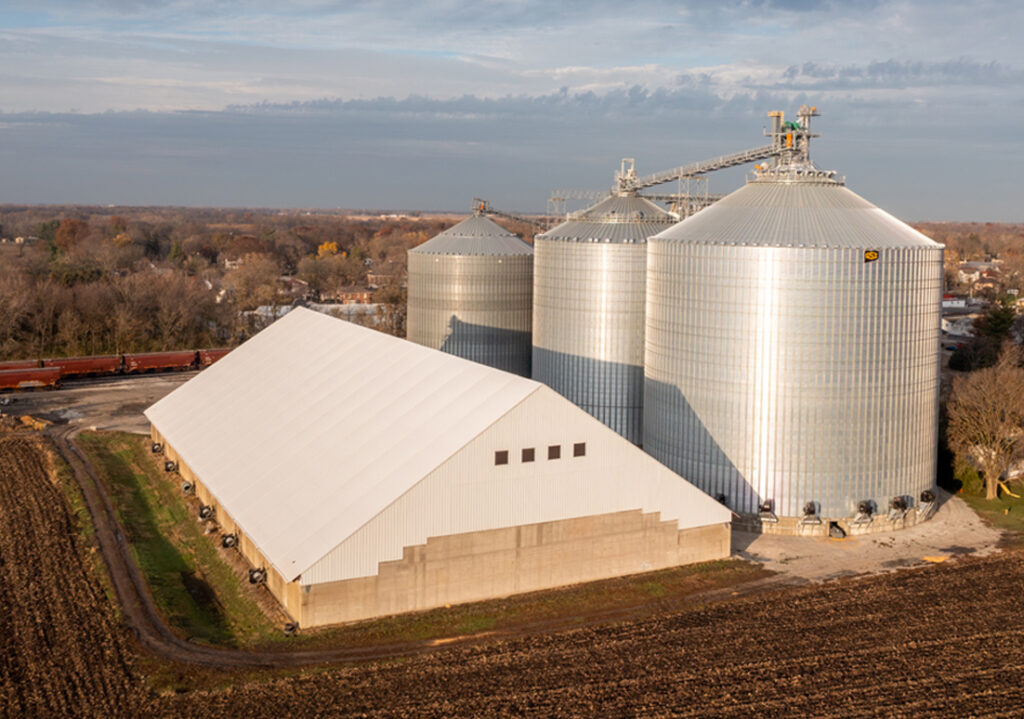
More co-ops are turning to flat grain storage because it adds capacity quickly and fits into existing operations. Large clear-span interiors support efficient unloading, easier equipment movement, and high-throughput grain flow. When designed well, flat storage complements bin systems by providing flexibility during peak periods.
It’s not about replacing what already works—it’s about adding control where it’s needed most.
Key takeaways
- Flat storage allows faster capacity expansion than bins.
- Open layouts support efficient grain handling.
- Flexible designs adapt to changing volumes and markets.
Rethinking “temporary” grain storage solutions
Outdoor piles may start as a short-term fix, but for many operations they’ve become routine. That comes with trade-offs: added labor, recurring tarp costs, and greater exposure to moisture and spoilage. Over time, those risks add up.
Covered storage reduces those variables. Combined with modern aeration and monitoring systems, it gives operators more control over grain quality while reducing manual checks.

Outdoor piles = greater risk
- recurring costs
- greater exposure
- greater safety risk

Temporary/Permanent flat storage = greater stability
- one time cost
- all-weather protection
- safer for employees
Key takeaways:
- Temporary piles often become long-term solutions.
- Covered storage lowers labor and spoilage risk.
- Automation supports quality management with fewer touchpoints.
Planning for efficiency, not just volume
Adding storage works best when it’s part of a broader plan. Truck flow, access points, pits, and loadout all affect how well a site performs under pressure. Expanding capacity without addressing these factors can simply shift bottlenecks elsewhere.
A system-wide approach helps protect throughput and avoids rushed decisions when harvest hits.
Key takeaways:
- Storage expansion should align with site layout and flow.
- System-level planning reduces bottlenecks.
- Early planning helps manage rising labor and energy costs.
Record yields are here to stay. The question is whether storage systems are ready for them.
The operations that stay ahead are the ones planning early—evaluating capacity, addressing constraints, and building flexibility into their systems. Closing the storage gap starts with smart, proactive decisions made before the next harvest arrives.
Get started on your storage solution today. Contact us.