
Built Around What’s Next: How One Tennessee Operation Is Rethinking Cattle Management
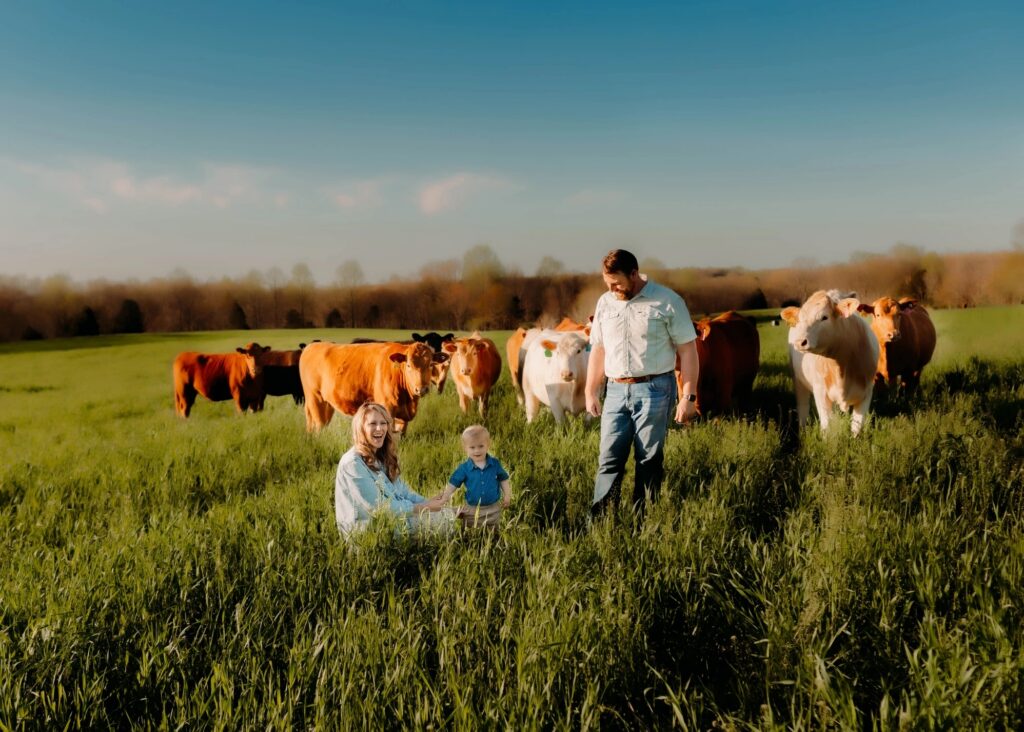
In Red Boiling Springs, Tennessee, cattle producer Nick Patterson is thinking beyond today’s operation.
As the incoming president of the Tennessee Cattlemen’s Association, Nick has a front-row seat to the challenges facing producers—from shrinking pastureland and rising input costs to declining herd numbers. But on his own operation, Acres of Grace, he’s taking a proactive approach to what comes next.
For Nick, that starts with rethinking how cattle are managed, and how infrastructure can support a more efficient, resilient future.
Table of Contents
Making the most of each acre in a shrinking landscape
Nick has seen firsthand how quickly the landscape is changing in the Southeast.
“Tennessee has been losing roughly nine acres of farmland every hour over the past several years,” he explains. “Land prices also have gone up, which makes it harder to rely on traditional grazing alone.”
Those shifts are already showing up in herd numbers. According to Nick, the state has lost an estimated half a million head of cattle over the past couple decades, a trend that reflects just how difficult it’s becoming to sustain traditional production models.
Rather than expanding acreage, Nick looked for ways to get more out of the land he already had.
By concentrating cattle in a controlled environment, the operation has been able to reduce pressure on pasture ground while improving consistency in feeding and care. This makes barns a realistic way to conserve land while continuing to raise cattle efficiently in a changing environment.
From pasture feeding to 25% feed savings under roof
The idea didn’t come overnight. Nick had been researching confinement barns for nearly a decade, influenced by his background as a veterinarian and time spent observing other production systems. But one of the clearest signs actually came from his own cattle.
“We had an old tobacco barn and, no matter the season, the cows would find their way into it,” he says. “That made sense in the winter, but they were still doing the same thing in the middle of summer. I think they were trying to tell me something.”
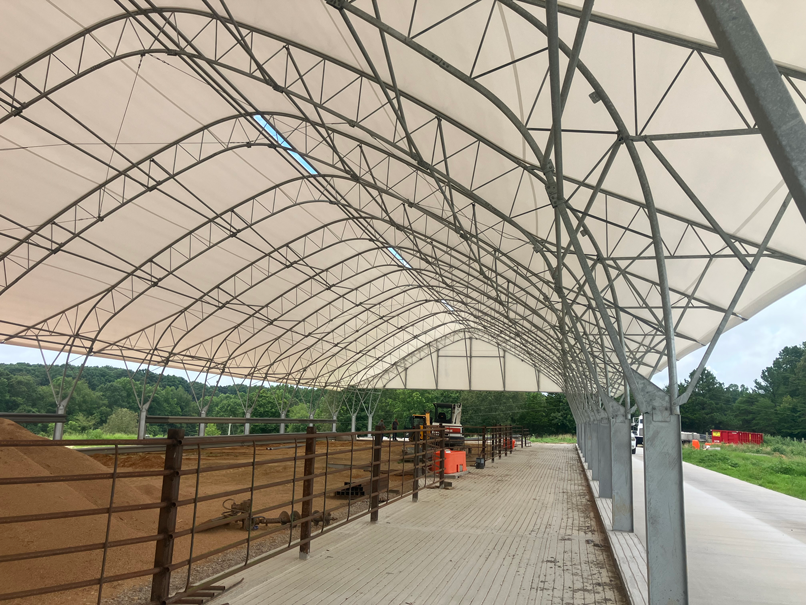
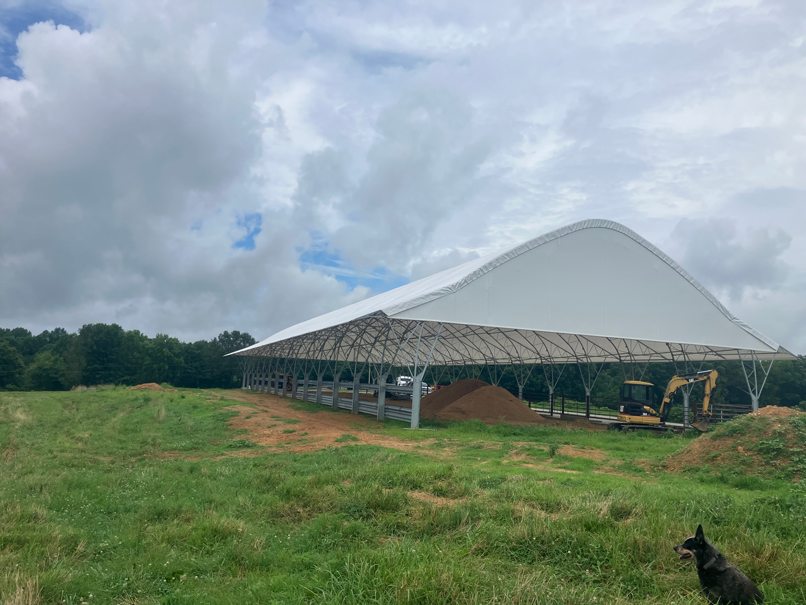
That realization and increasing pressure on land efficiency ultimately led Nick to invest in a 62′ x 224′ Accu-Steel Integrity™ building, bringing a portion of his herd under roof for the first time.
The results from pasture-based feeding to a more controlled environment didn’t take long to show results.
“We’re seeing about a 25% feed savings compared to feeding out on pasture,” Nick says.
Those savings add up quickly for 90 cow-calf pairs over a winter feeding period, helping offset the cost of the building while improving overall efficiency.
But feed savings are just one piece of the equation.
Bringing cattle under roof has also:
- Reduced labor by centralizing feeding and daily management.
- Improved cattle comfort by minimizing exposure to mud and extreme weather.
- Created a more controlled environment for herd health and reproductive management.
“It’s changed how we manage cattle day-to-day,” Nick notes. “Everything is more consistent and I have better peace of mind for my cattle’s health. They actually got a bit fat over the winter, which is really saying something!”
Expanding into data-driven cattle management
Nick isn’t stopping with one building.
A new 600-foot confinement facility is currently in progress and designed specifically for heifer development and more advanced cattle management practices.
The new barn will incorporate feed intake monitoring technology, allowing Nick to track individual animal performance—including consumption and weight gain. That data will play a key role in improving breeding decisions when evaluating genomics and expected progeny differences (EPDs).
“It gives us another layer of insight,” he says. “We can make more informed decisions based on real data instead of just observation.”
Turning manure into a new revenue stream
One of the biggest advantages of the confinement approach has been the ability to capture and reuse manure, which wasn’t possible at the same scale with pasture-based feeding.
That’s opening the door to an entirely new revenue stream for Acres of Grace.
The operation already runs a mulch and soil business and Nick plans to expand into cattle manure-based compost for the lawn and garden market.
“We’re collecting a significant amount of material that can be turned into a high-value product,” he explains. “It’s something that adds another layer of return from the same investment.”
It also supports a more sustainable system, recycling nutrients back into crop ground and reducing waste.
Key Takeaways:
- Data-driven decisions are reshaping cattle management
- Confinement feeding unlocks manure as a revenue opportunity
- Sustainability and profitability can go hand-in-hand
Structuring the investment to pay the way
Like any major investment, building new infrastructure requires careful financial planning.
For Nick, that meant leveraging equity in farmland and working with Farm Credit to secure longer-term financing.
“It’s about balancing upfront cost with long-term return,” he says.
These barns are designed to support both cash flow and long-term asset growth through feed savings, improved efficiency, and the added value of manure-based products.
“They’re not just a cost, they’re part of the operation’s future.”
A variety of financing options may be available for producers considering a similar investment. Programs through the Natural Resources Conservation Service (NRCS), along with guidance from Accu-Steel, can help find solutions that fit your operation and long-term goals.
Investing in the next generation
The value of these buildings goes beyond economics for Nick and Acres of Grace.
The operation regularly hosts school tours, youth events, and educational programs to connect the next generation with agriculture.
“I want kids to understand where their food comes from and see opportunities in this industry,” he says.
That same mindset carries into how he thinks about the farm’s future.
“These buildings are something my kids can build on,” Nick says. “I want to leave them a legacy of good decisions.”
As land becomes harder to access and the industry continues to evolve, having the right infrastructure in place can make all the difference.
Key Takeaways:
- Smart financing turns big infrastructure into a long-term asset
- NCRS programs and industry partners can help make confinement builds more accessible
- The right infrastructure is an investment in the farm’s future generations
Built for a changing cattle industry
Producers across the Southeast and across the U.S. are facing the same reality: less available land, higher costs, and increasing pressure to do more with fewer resources.
For Nick, confinement barns have become a realistic way to meet those needs.
“It’s not about replacing pasture,” he explains. “It’s about using everything more efficiently.”
That mindset has shaped more than a single investment at Acres of Grace. It’s created a system that supports day-to-day efficiency, long-term growth, and future opportunities for the next generation.
His advice to other producers is straightforward:
“Look at your operation and your long-term goals. If you manage it right, a facility like this can change what you’re able to do.”
Because in today’s environment, the right infrastructure isn’t just about solving today’s challenges—it’s about building an operation that’s ready for what comes next.